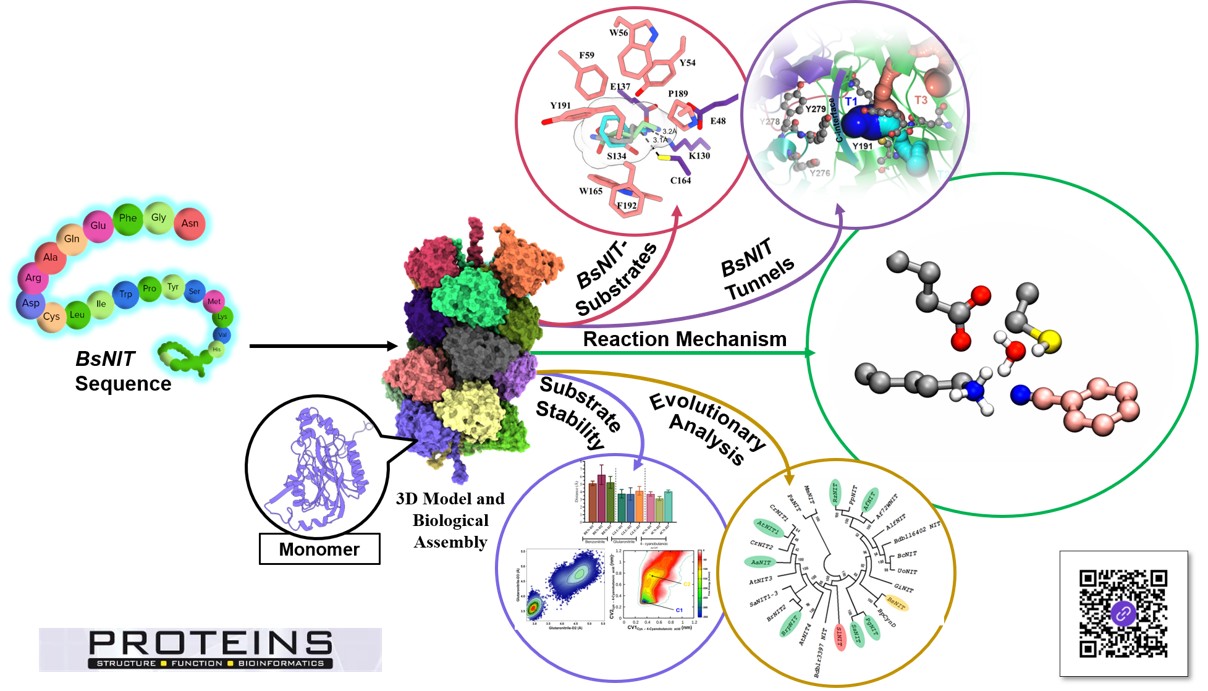
This study provides the first comprehensive computational investigation of the nitrilase from Bacillus safensis (BsNIT) and Spirosoma linguale DSM 74 (SINIT) for elucidation on the reaction mechanism for nitrile hydrolysis and nitrile hydration reaction respectively. Mechanistic analysis revealed critical catalytic events, including nucleophilic attack by Cys and water-mediated proton transfer by Glu, with covalent substrate binding identified as the rate-limiting step. The study also proposes targeted mutations to enhance activity toward bulky nitrile pollutants, providing a foundation for engineering BsNIT variants with improved specificity and efficiency for environmental bioremediation and biocatalysis applications.
Highlights:
- Identified the T1 tunnel as the primary pathway for substrate entry and product release in BsNIT.
- Revealed key catalytic steps, including Cys164-mediated nucleophilic attack and Glu48-driven proton transfer.
- Determined covalent substrate binding as the rate-limiting step with an energy barrier of 14.8 kcal mol⁻¹.
- Proposed targeted mutations to enhance BsNIT activity and specificity toward bulky nitrile pollutants for bioremediation.