HomeCategory

Publications

June 15, 2026
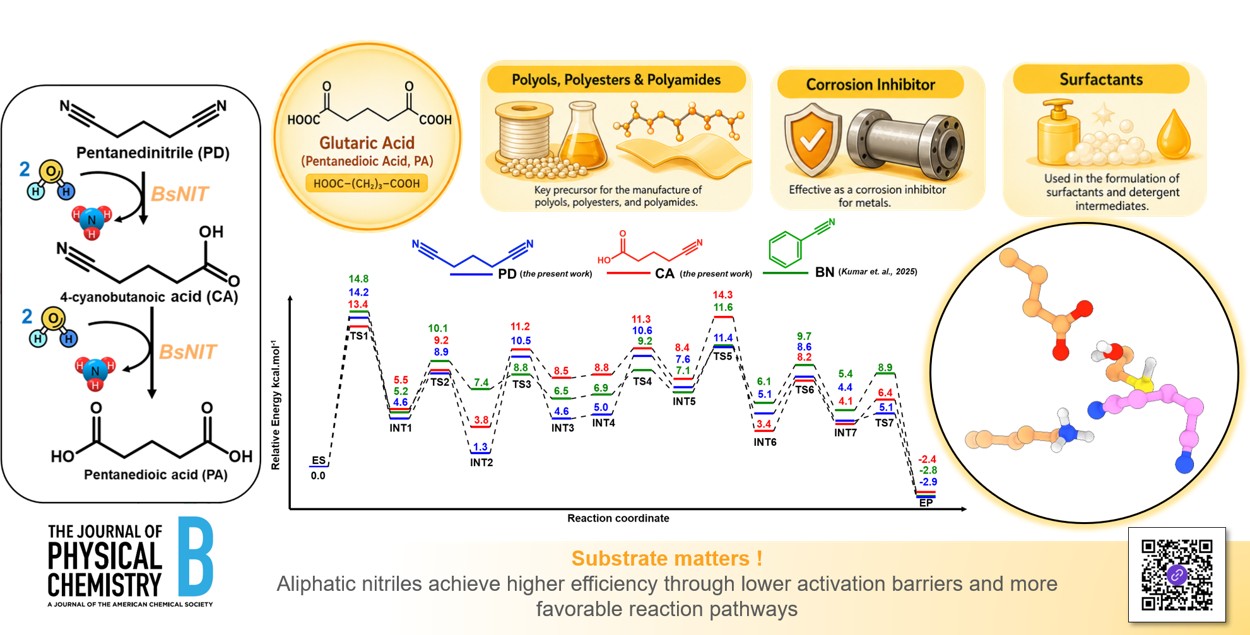
Quantum Molecular Dynamics Study on the Reaction Mechanism of Nitrilase toward an Aliphatic Dinitrile Substrate

This study employed quantum mechanical dynamics (QMD) simulations to elucidate the catalytic mechanism of Bacillus safensis nitrilase (BsNIT) toward pentanedinitrile (PD). The results revealed a sequential conversion of PD to 4-cyanobutanoic acid and subsequently to pentanedioic acid through two water-mediated hydrolysis steps involving the catalytic triad (C164, K130, and E38). Key intermediates and transition states...

June 15, 2026
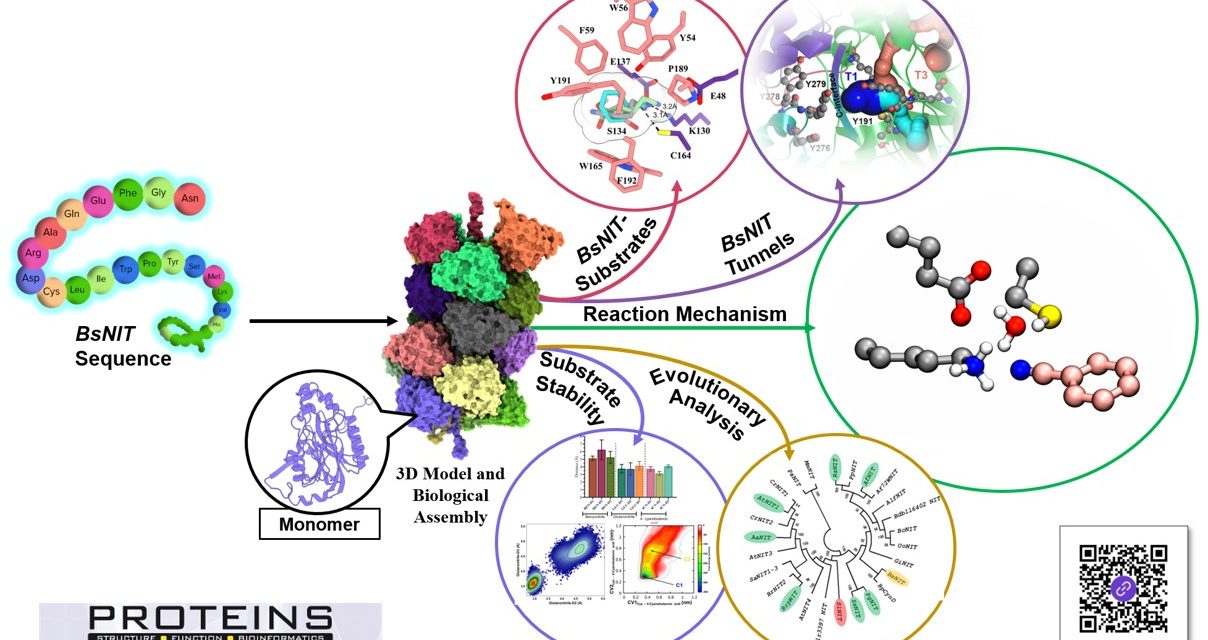
Unraveling the Structure–Function Relationship and Mechanism of an Important Spiro-Forming Nitrilase Using Metadynamics and Quantum Molecular Dynamics

This study provides the first comprehensive computational investigation of the nitrilase from Bacillus safensis (BsNIT) and Spirosoma linguale DSM 74 (SINIT) for elucidation on the reaction mechanism for nitrile hydrolysis and nitrile hydration reaction respectively. Mechanistic analysis revealed critical catalytic events, including nucleophilic attack by Cys and water-mediated proton transfer by Glu, with covalent substrate...

June 11, 2026
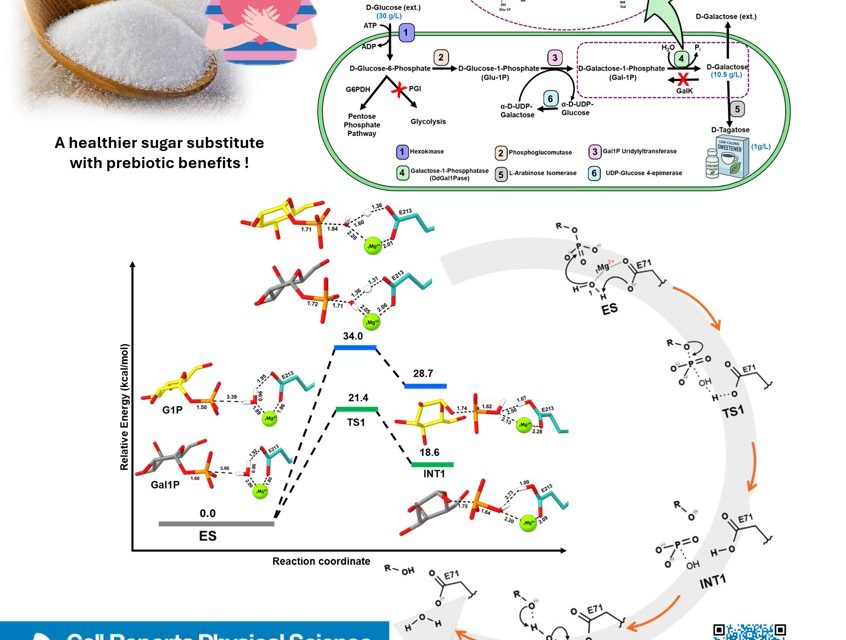
Reversal of the Leloir pathway to promote galactose and tagatose synthesis from glucose

In this research article, we demonstrate direct conversion of glucose to D-tagatose, a low-calorie rare sugar, using an engineered Escherichia coli whole-cell system. Our study identifies a galactose-1-phosphate phosphatase (DdGal1Pase) with stringent substrate selectivity driven by distinct hydrogen-bond networks, enabling reversal of the Leloir pathway and glucose-based tagatose biosynthesis. This work provides a foundation for...

October 17, 2024
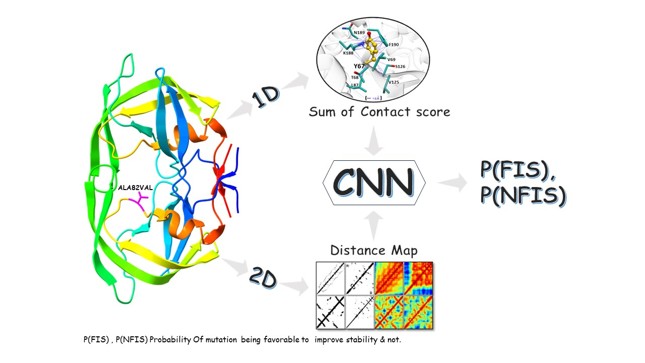
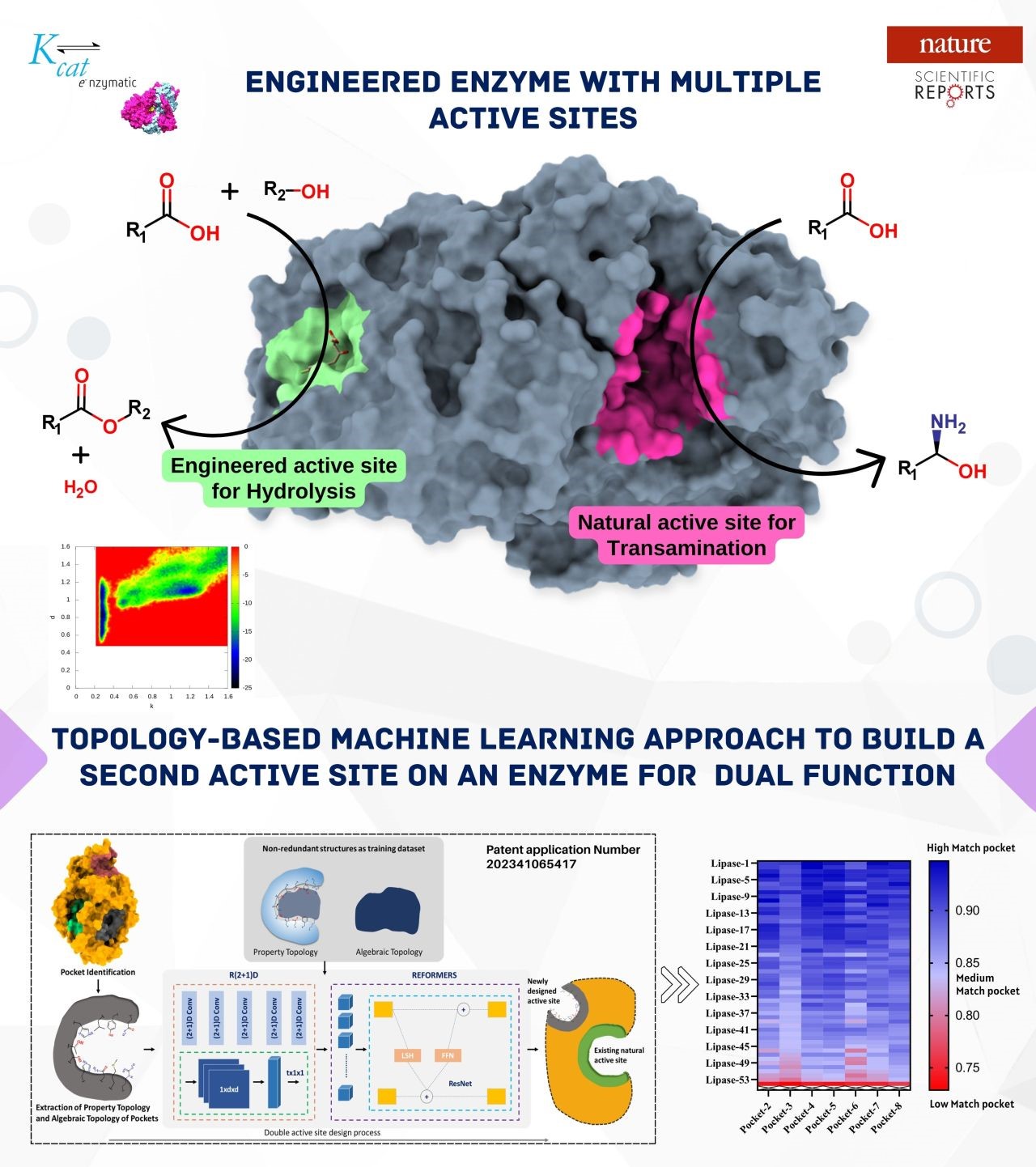
Computational studies on the catalytic potential of the double active site for enzyme engineering

We’re excited to announce our latest publication in Nature Scientific Reports on proteins with double active sites, which could revolutionize enzyme design strategies. We have developed an AI-based tool which creates enzymes with multiple active sites, enhancing their functionality by incorporating diverse catalytic activities. For example, a transaminase enzyme can now also facilitate hydrolysis reactions....

October 17, 2024
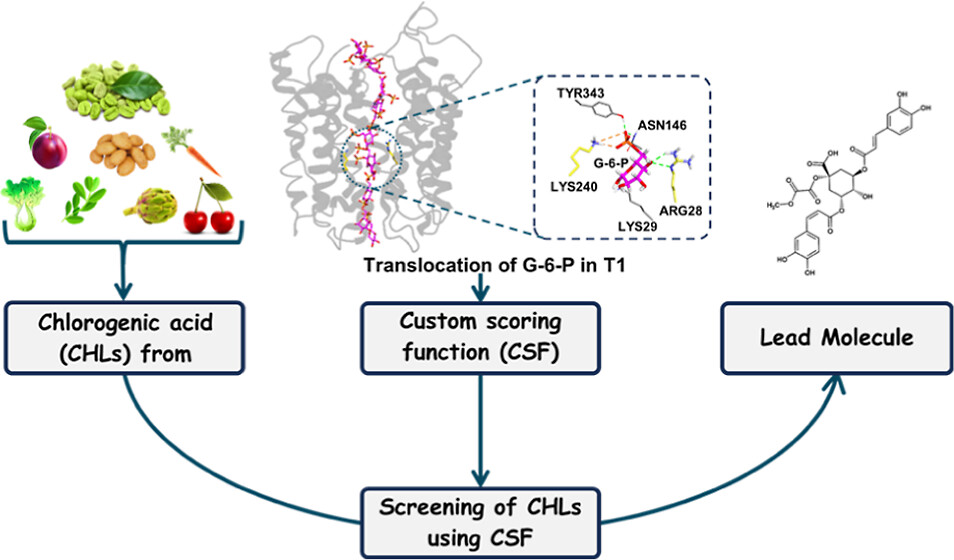
In Silico Screening of Chlorogenic Acids from Plant Sources against Human Translocase-I to Identify Competitive Inhibitors to Treat Diabetes

Chlorogenic acids (CHLs) are known to competitively bind to translocase-I (T1) of the glucose-6-phosphatase (G6 Pase) system, thereby inhibiting the transport of glucose-6-phosphate (G6P). This competitive binding results in a consequential reduction in blood sugar levels. In this study, steered molecular dynamics (SMD) simulation is employed to investigate the interaction between T1 and G6P, aiming...

June 15, 2026
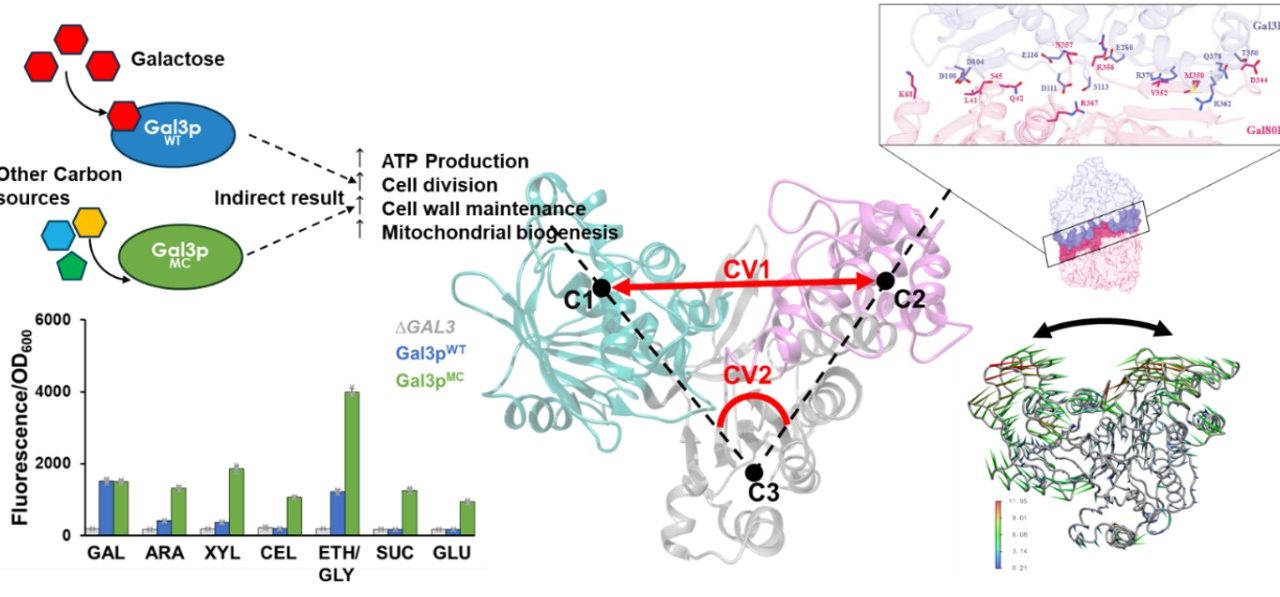
TOWARDS UNIVERSAL SYNTHETIC HETEROTROPHY USING A METABOLIC COORDINATOR

Engineering the utilization of non-native substrates, or synthetic heterotrophy, in proven industrial microbes such as Saccharomyces cerevisiae represents an opportunity to valorize plentiful and renewable sources of carbon and energy as inputs to bioprocesses. We previously demonstrated that activation of the galactose (GAL) regulon, a regulatory structure used by this yeast to coordinate substrate utilization...

June 2, 2020
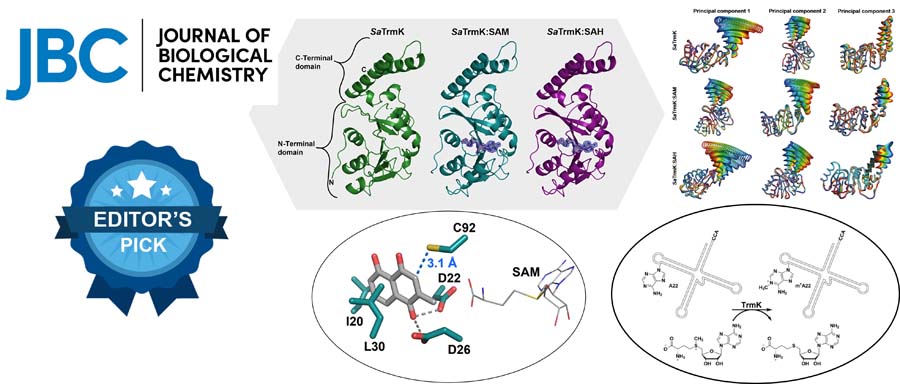
Structure, dynamics, and molecular inhibition of the Staphylococcus aureus m1A22-tRNA methyltransferase TrmK

The enzyme m1A22-tRNA methyltransferase (TrmK) from Staphylococcus aureus catalyzes the transfer of a methyl group to the N1 of adenine 22 in bacterial tRNAs. TrmK is essential for S. aureus survival during infection, but has no homolog in mammals, making it a promising target for antibiotic development. Highlights Molecular dynamics simulations point to specific motions...

May 13, 2022
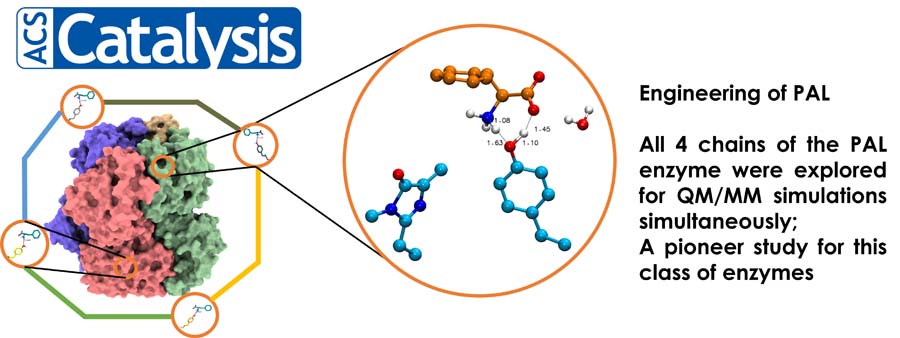
In-Depth Sequence–Function Characterization Reveals Multiple Pathways To Enhance Enzymatic Activity

Phenyl Ammonia Lyase (PAL) has garnered significant attention as the active ingredient in Pegvaliase, the only FDA-approved drug for treating classical phenylketonuria (PKU). Highlights: Deep Mutational scanning (DMS) to derive functional hotspots Hybrid QM/MM techniques combined with meta-dynamics on all 4 active sites of the PAL tetramer simultaneously, to enhance the sampling of coordinates relevant to...

June 20, 2020
Extensive Modelling and Quantum Chemical Study of Sterol C-22 Desaturase mechanism: a commercially important Cytochrome P450 family

In this study, we have conducted in-depth modelling studies, extended molecular dynamics experiments, and quantum chemical calculations to throw light on the structure-function relationship and its mechanism of enzyme action. A novel finding on second hydrogen abstraction in the C-22 desaturase mechanism was delineated. Read More: https://doi.org/10.1016/j.cattod.2021.12.004

June 23, 2020
Identification of a Reaction Intermediate and Mechanism of Action of Intermediary Enzymes in Plumbagin Biosynthetic Pathway

Scaling up is a problem that a lot of biotechnologists find difficult, in terms of manufacturing techniques and products; that’s where we provide biocatalytic solutions at Kcat! The above schema is an intermediary reaction in the Plumbagin Biosynthetic Pathway. We at Kcat have identified two critical steps and respective enzymes in the synthesis of Plumbagin,...