HomeAuthor

Kcat Editor

June 19, 2026
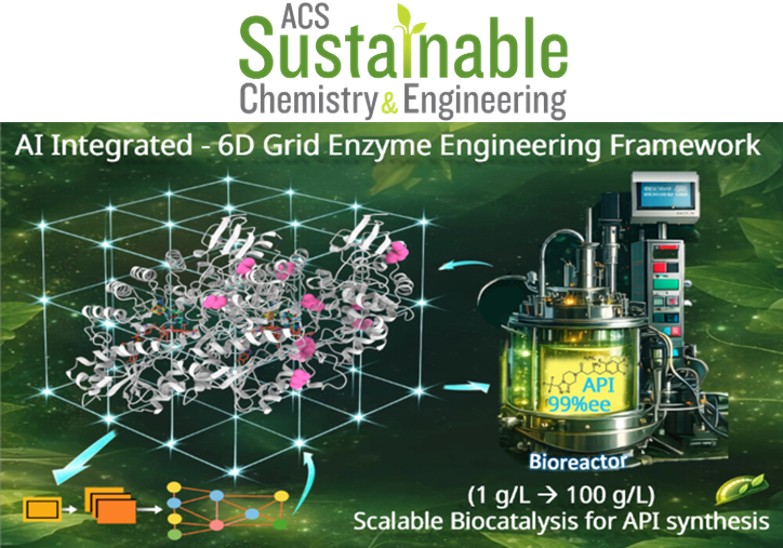
Breaking the Scale Barrier in Biocatalyst Development: AI-Powered Enzyme Engineering for Minimal Variants and Commercial Efficiency

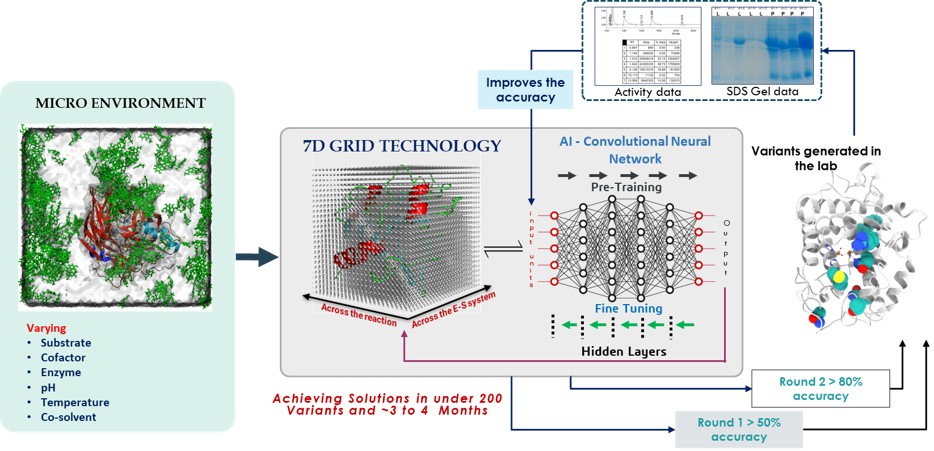
In this study, we developed a sustainable biocatalytic process for sitagliptin production using an AI-driven 6D-grid protein engineering platform. By leveraging molecular interaction data, solvent effects, and a database of 1.39 million structural fragments, we identified high-performing R-transaminase variants while minimizing experimental screening. The engineered enzyme exhibited excellent solubility, stability, and scalability, achieving up to...
June 15, 2026
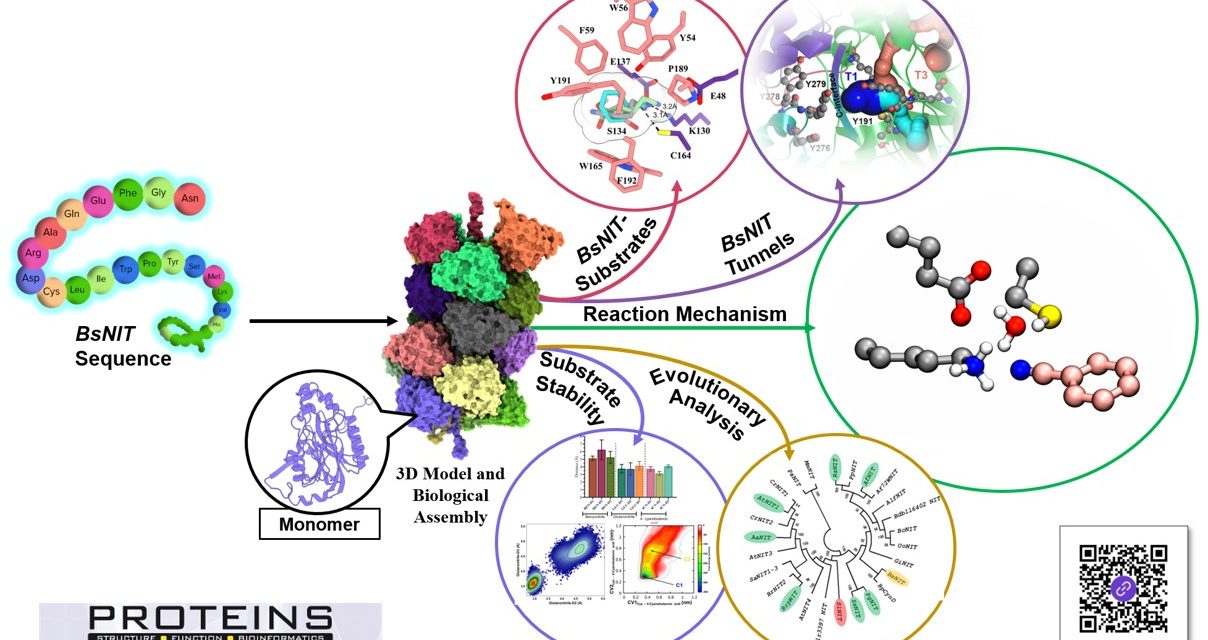
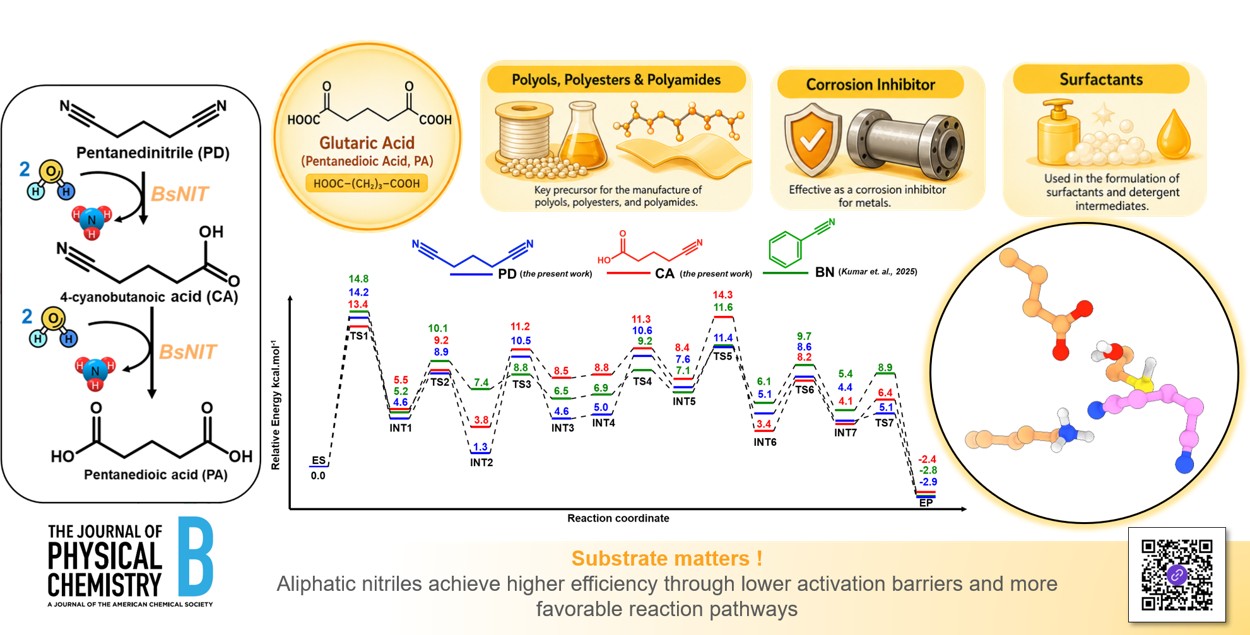
Quantum Molecular Dynamics Study on the Reaction Mechanism of Nitrilase toward an Aliphatic Dinitrile Substrate

This study employed quantum mechanical dynamics (QMD) simulations to elucidate the catalytic mechanism of Bacillus safensis nitrilase (BsNIT) toward pentanedinitrile (PD). The results revealed a sequential conversion of PD to 4-cyanobutanoic acid and subsequently to pentanedioic acid through two water-mediated hydrolysis steps involving the catalytic triad (C164, K130, and E38). Key intermediates and transition states...

June 11, 2026
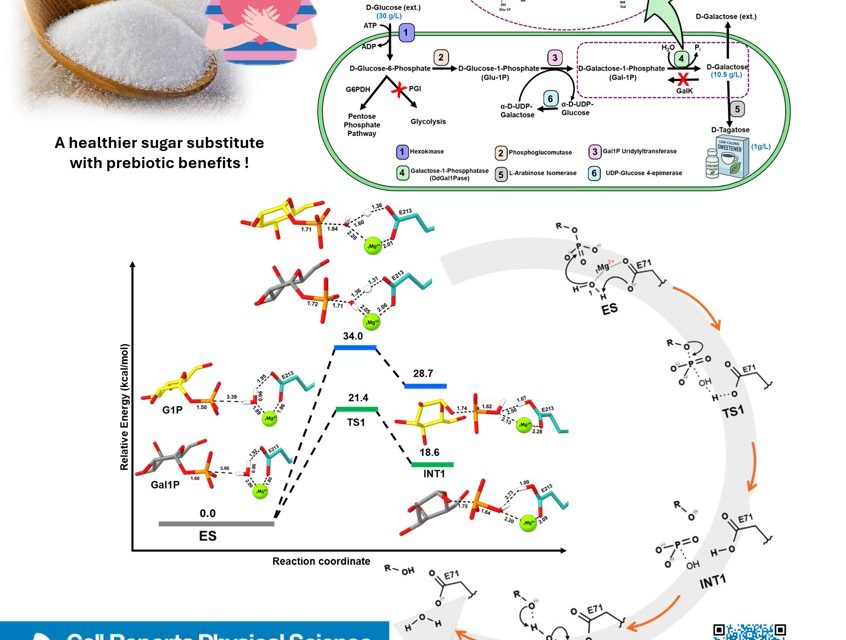
Reversal of the Leloir pathway to promote galactose and tagatose synthesis from glucose

In this research article, we demonstrate direct conversion of glucose to D-tagatose, a low-calorie rare sugar, using an engineered Escherichia coli whole-cell system. Our study identifies a galactose-1-phosphate phosphatase (DdGal1Pase) with stringent substrate selectivity driven by distinct hydrogen-bond networks, enabling reversal of the Leloir pathway and glucose-based tagatose biosynthesis. This work provides a foundation for...

June 15, 2026
Unraveling the Structure–Function Relationship and Mechanism of an Important Spiro-Forming Nitrilase Using Metadynamics and Quantum Molecular Dynamics

This study provides the first comprehensive computational investigation of the nitrilase from Bacillus safensis (BsNIT) and Spirosoma linguale DSM 74 (SINIT) for elucidation on the reaction mechanism for nitrile hydrolysis and nitrile hydration reaction respectively. Mechanistic analysis revealed critical catalytic events, including nucleophilic attack by Cys and water-mediated proton transfer by Glu, with covalent substrate...

June 19, 2026
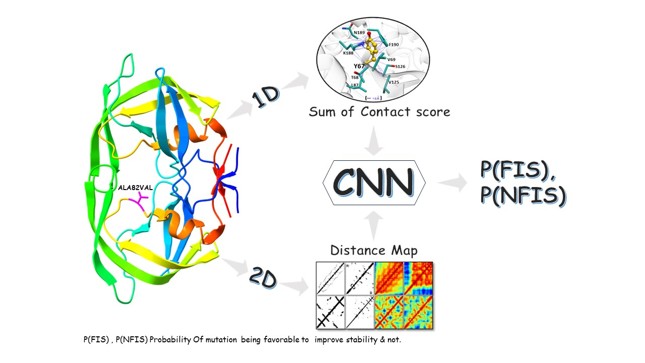
Multimodal neural network for enhanced protein stability prediction by integration of contact scores and spatial maps

In this study, we developed an AI-driven protein stability prediction framework that integrates AlphaFold-generated structures, molecular refinement, and deep learning techniques. Multiple machine learning and neural network architectures were evaluated, with a multi-input CNN model leveraging protein contact maps delivering the best performance. The framework enables efficient prediction of mutation-induced stability changes, reducing reliance on...

October 17, 2024
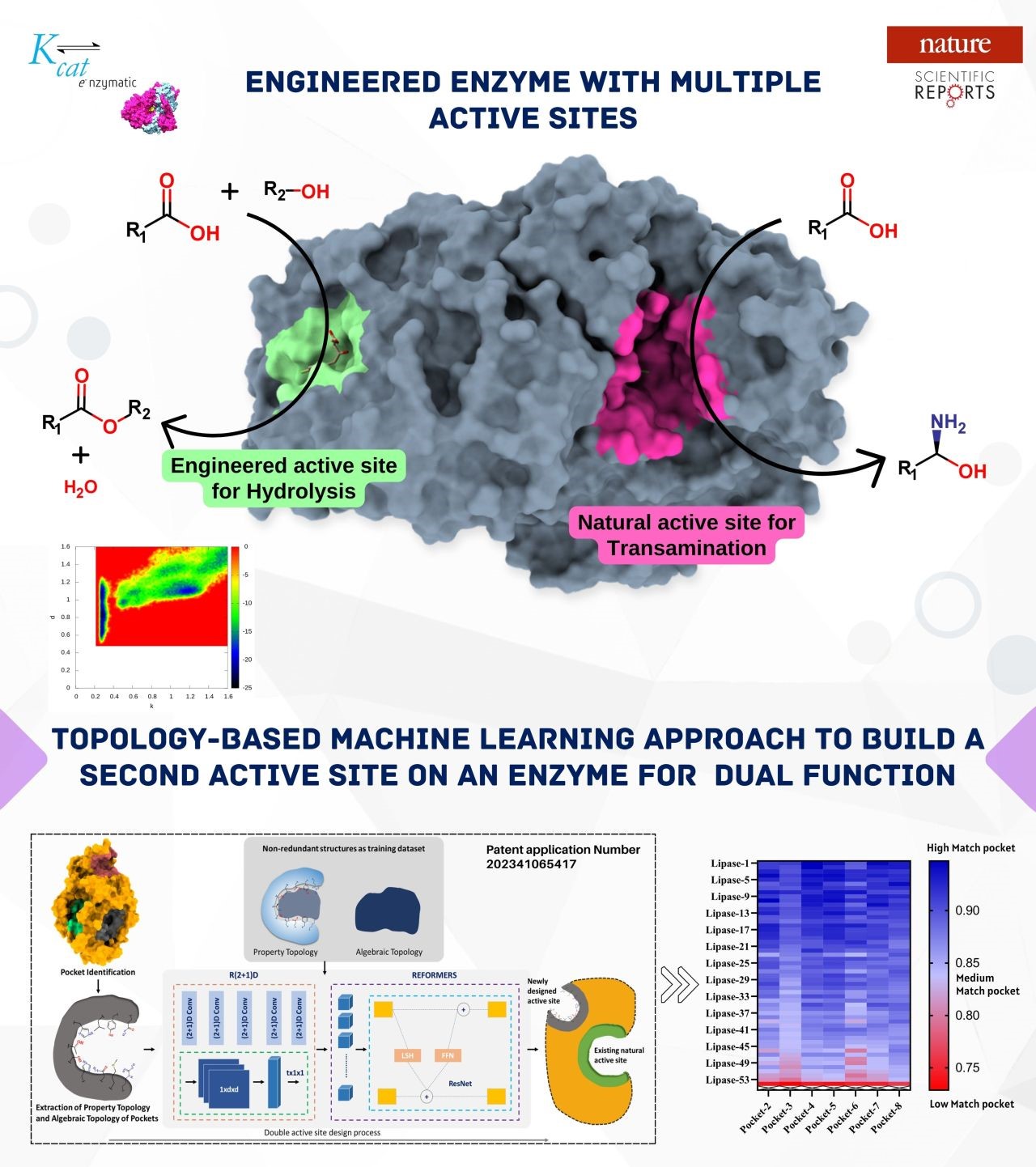
Computational studies on the catalytic potential of the double active site for enzyme engineering

We’re excited to announce our latest publication in Nature Scientific Reports on proteins with double active sites, which could revolutionize enzyme design strategies. We have developed an AI-based tool which creates enzymes with multiple active sites, enhancing their functionality by incorporating diverse catalytic activities. For example, a transaminase enzyme can now also facilitate hydrolysis reactions....

October 17, 2024
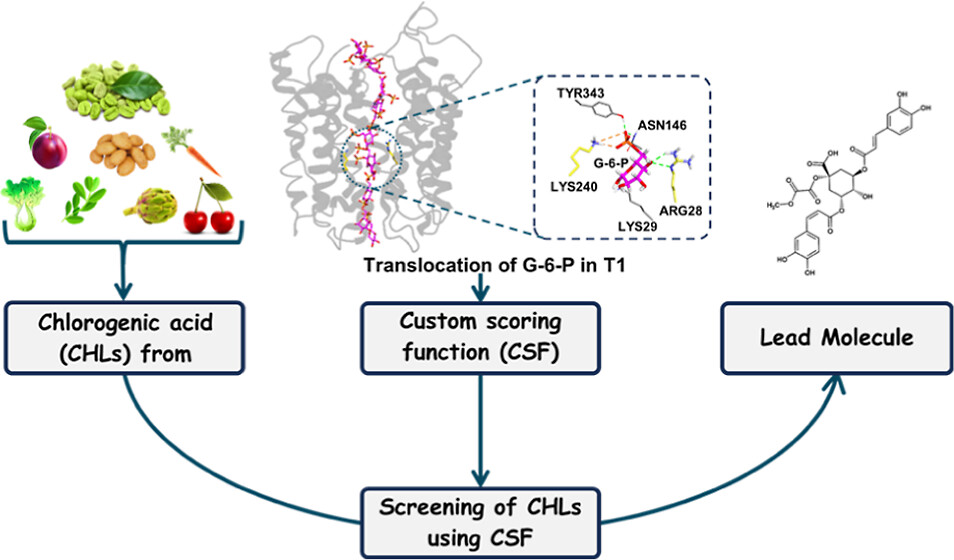
In Silico Screening of Chlorogenic Acids from Plant Sources against Human Translocase-I to Identify Competitive Inhibitors to Treat Diabetes

Chlorogenic acids (CHLs) are known to competitively bind to translocase-I (T1) of the glucose-6-phosphatase (G6 Pase) system, thereby inhibiting the transport of glucose-6-phosphate (G6P). This competitive binding results in a consequential reduction in blood sugar levels. In this study, steered molecular dynamics (SMD) simulation is employed to investigate the interaction between T1 and G6P, aiming...

June 15, 2026
Towards universal synthetic heterotrophy using a metabolic coordinator

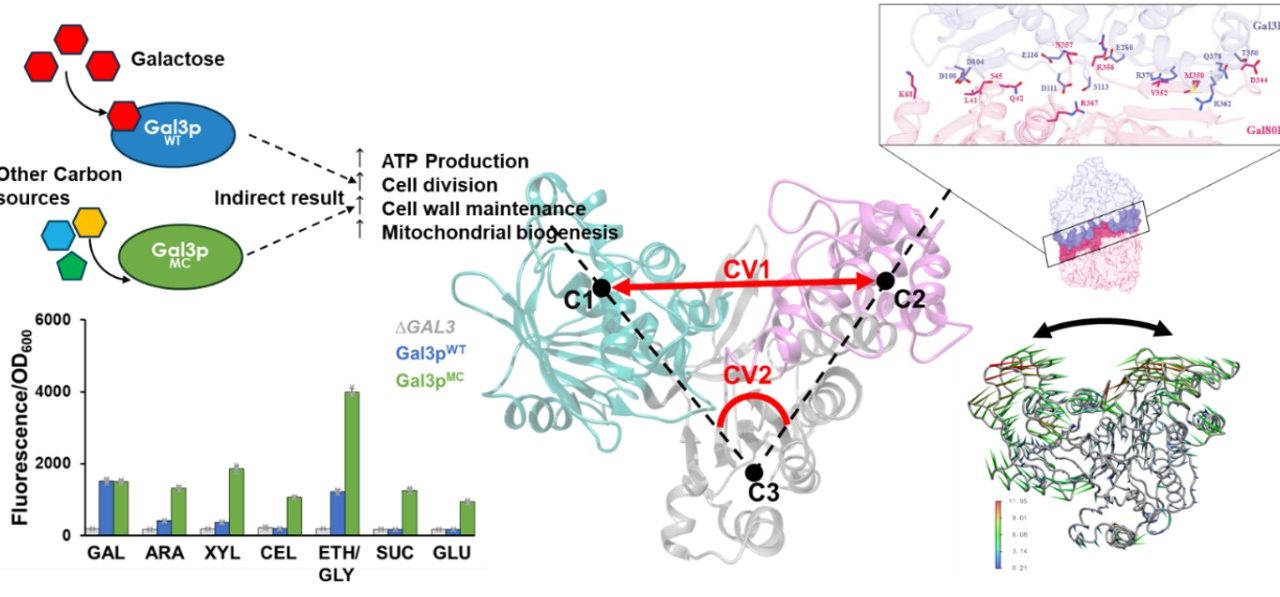
Engineering the utilization of non-native substrates, or synthetic heterotrophy, in proven industrial microbes such as Saccharomyces cerevisiae represents an opportunity to valorize plentiful and renewable sources of carbon and energy as inputs to bioprocesses. We previously demonstrated that activation of the galactose (GAL) regulon, a regulatory structure used by this yeast to coordinate substrate utilization...

June 23, 2026
LSFG: Method for capturing atomic details of proteins using a 3d grid for mutational analysis

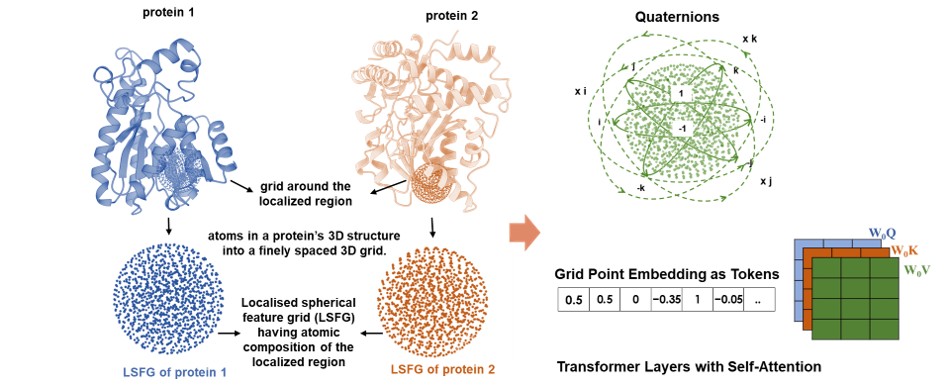
LSFG is a novel method for engineering proteins by utilizing an atomistic grid-based computational method that analyzes and compares protein atomic compositions. By arranging a protein’s atoms into a fine 3D grid, this approach captures atomic-level details in highly localized regions, allowing comparison of specific protein regions even in the absence of structural similarity. Unlike...

June 23, 2026
A method for engineering proteins

Presented herein is a method for protein engineering that constructs a three-dimensional grid space around a protein. Different probes simulating amino acid interactions are placed within the grid. Pair Interaction Energy is calculated using the FMO technique for probe-protein interactions. An algorithmic process calculates the sum of PIEs, extending from each grid point to its...