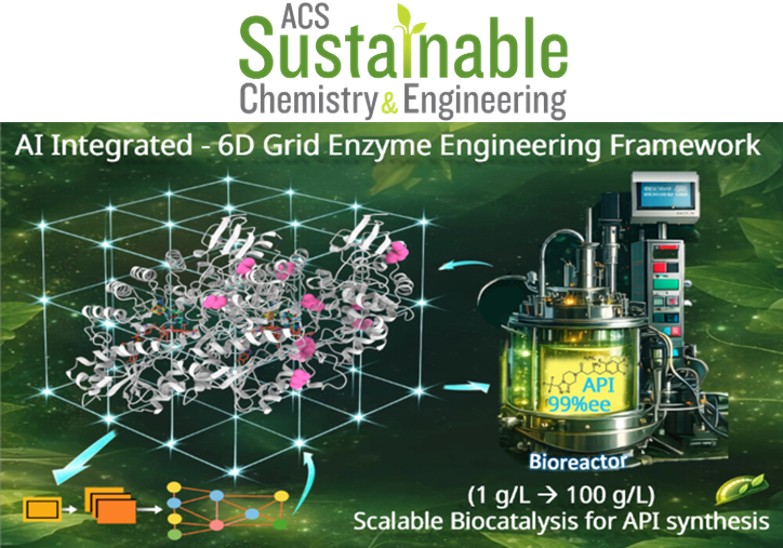
In this study, we developed a sustainable biocatalytic process for sitagliptin production using an AI-driven 6D-grid protein engineering platform. By leveraging molecular interaction data, solvent effects, and a database of 1.39 million structural fragments, we identified high-performing R-transaminase variants while minimizing experimental screening. The engineered enzyme exhibited excellent solubility, stability, and scalability, achieving up to 89% conversion with >99% enantiomeric excess during process scale-up. To enhance sustainability, DMSO was replaced with a biodegradable ethanol/PEG-400 co-solvent system, delivering >80% conversion under industrially relevant conditions. This study highlights the potential of AI-guided enzyme engineering to accelerate biocatalyst development and enable greener pharmaceutical manufacturing.
Highlights:
- AI-guided protein engineering identified high-performance transaminase variants with minimal experimental screening.
- Engineered enzymes achieved up to 89% sitagliptin conversion with >99% enantiomeric excess at scale.
- Replacing DMSO with a biodegradable ethanol/PEG-400 system enabled greener, industrially relevant biocatalysis.