News

Credibly reintermediate backend ideas for cross-platform models. Continually reintermediate integrated processes through technically sound intellectual capital. Holistically foster superior methodologies without market-driven best practices.
June 20, 2020
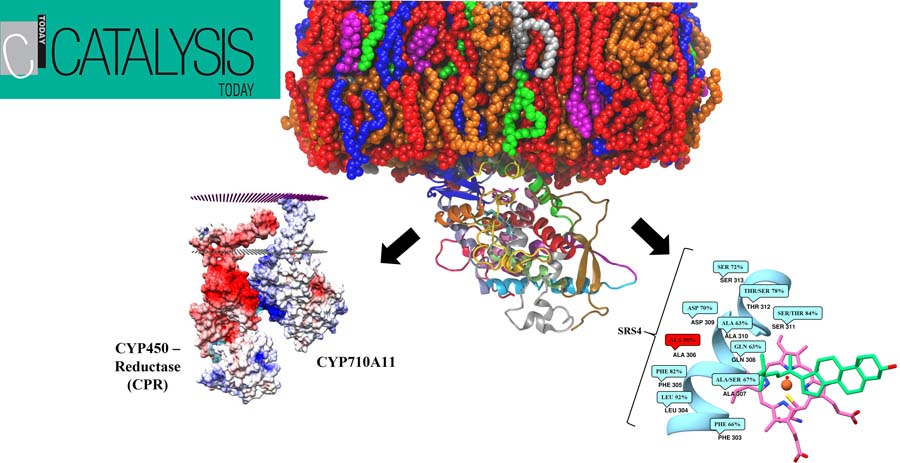
Extensive Modelling and Quantum Chemical Study of Sterol C-22 Desaturase mechanism: a commercially important Cytochrome P450 family

In this study, we have conducted in-depth modelling studies, extended molecular dynamics experiments, and quantum chemical calculations to throw light on the structure-function relationship and its mechanism of enzyme action. A novel finding on second hydrogen abstraction in the C-22 desaturase mechanism was delineated. Read More: https://doi.org/10.1016/j.cattod.2021.12.004

June 23, 2020
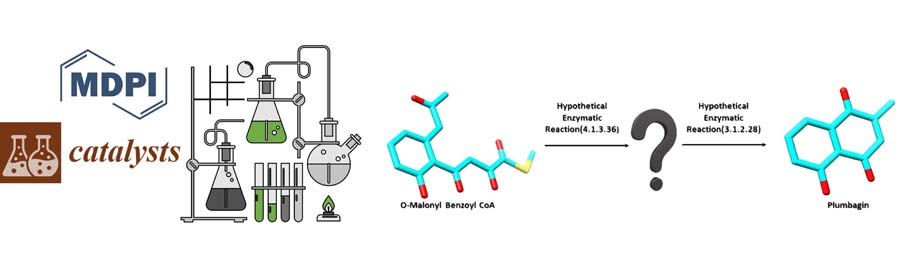
Identification of a Reaction Intermediate and Mechanism of Action of Intermediary Enzymes in Plumbagin Biosynthetic Pathway

Scaling up is a problem that a lot of biotechnologists find difficult, in terms of manufacturing techniques and products; that’s where we provide biocatalytic solutions at Kcat! The above schema is an intermediary reaction in the Plumbagin Biosynthetic Pathway. We at Kcat have identified two critical steps and respective enzymes in the synthesis of Plumbagin,...

June 23, 2026
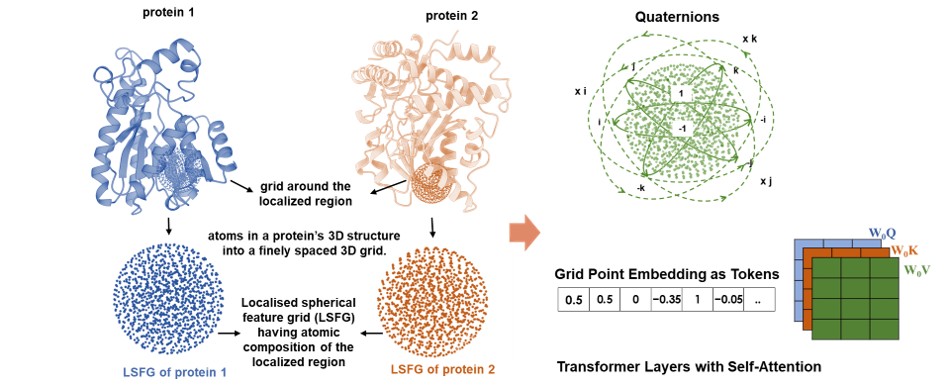
LSFG: Method for capturing atomic details of proteins using a 3d grid for mutational analysis

LSFG is a novel method for engineering proteins by utilizing an atomistic grid-based computational method that analyzes and compares protein atomic compositions. By arranging a protein’s atoms into a fine 3D grid, this approach captures atomic-level details in highly localized regions, allowing comparison of specific protein regions even in the absence of structural similarity. Unlike...

June 23, 2026
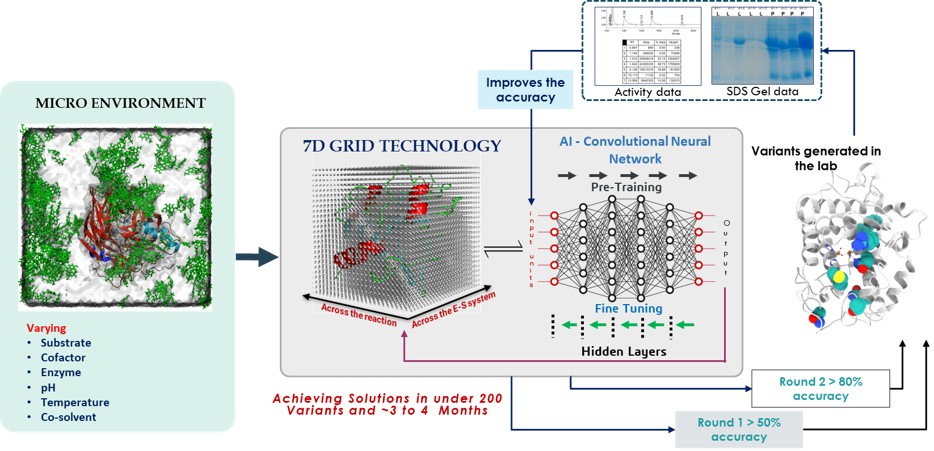
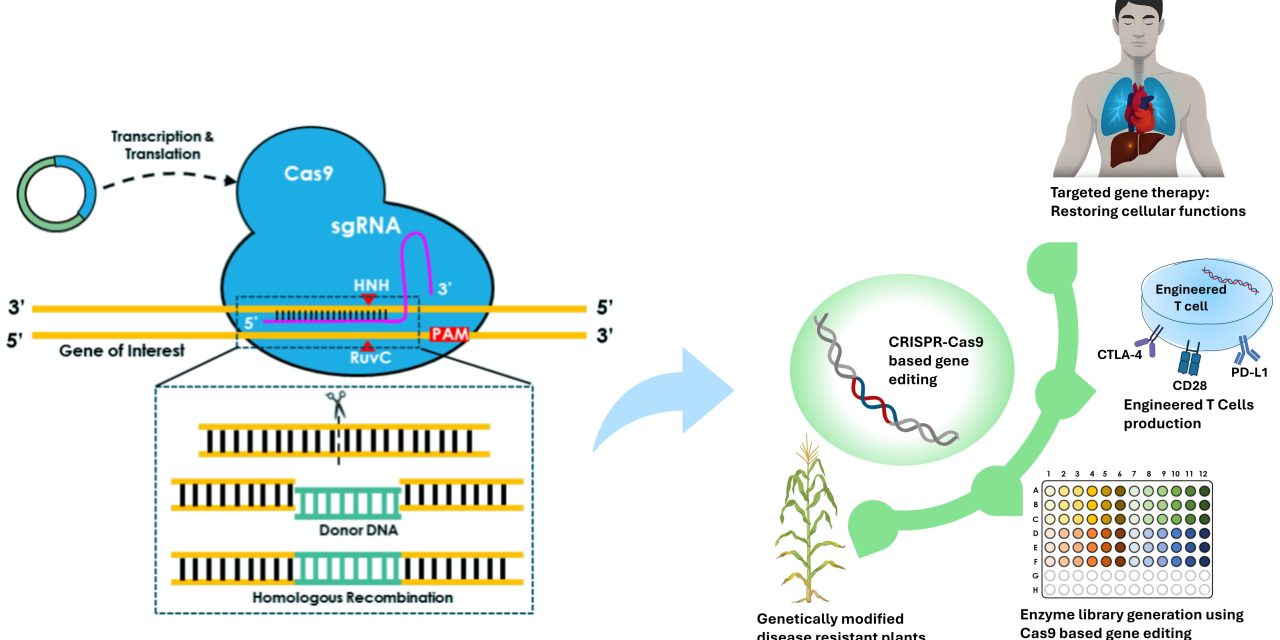
A method for engineering proteins

Presented herein is a method for protein engineering that constructs a three-dimensional grid space around a protein. Different probes simulating amino acid interactions are placed within the grid. Pair Interaction Energy is calculated using the FMO technique for probe-protein interactions. An algorithmic process calculates the sum of PIEs, extending from each grid point to its...

June 23, 2026
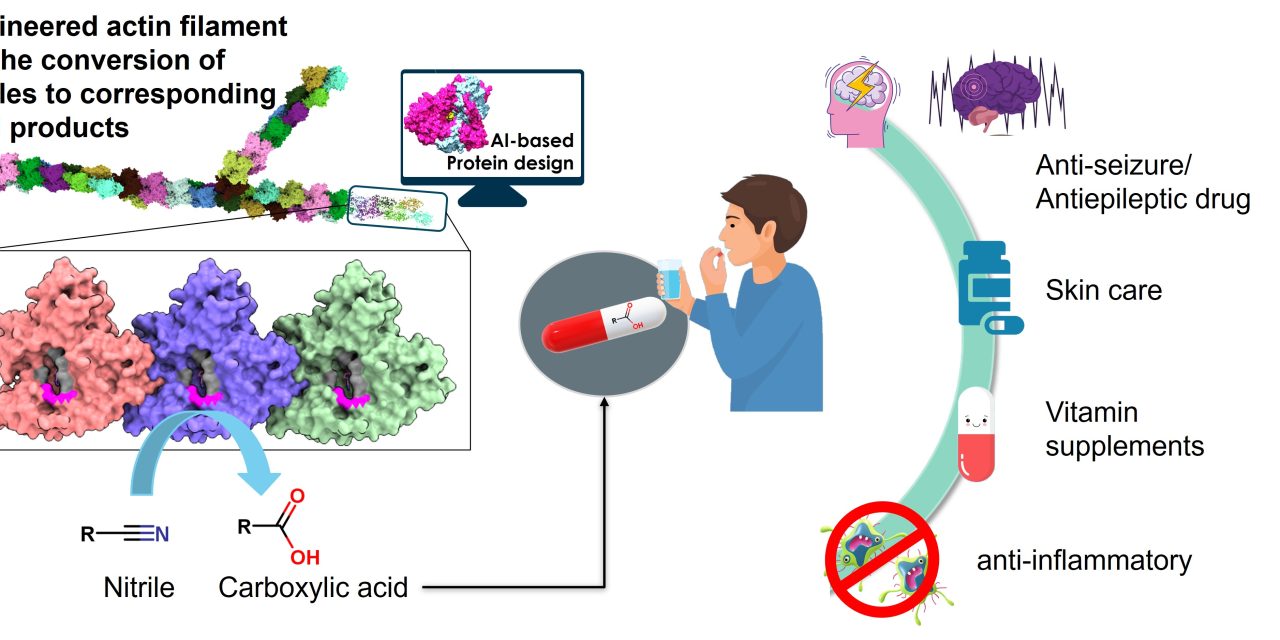
Engineered cytoskeleton actin polypeptide with nitrilase activity

The functional repurposing of structural proteins offers exciting opportunities for sustainable and efficient biocatalysis. This study presents the engineering of two structural proteins, F-actin, to exhibit nitrilase activity, enabling the conversion of 1-(cyanomethyl)cyclohexane-1-carbonitrile into 2-(1-cyanocyclohexyl)acetic acid, a key intermediate in the production of gabapentin. By introducing catalytic residues adapted from nitrilase enzymes, these engineered proteins...

June 15, 2026
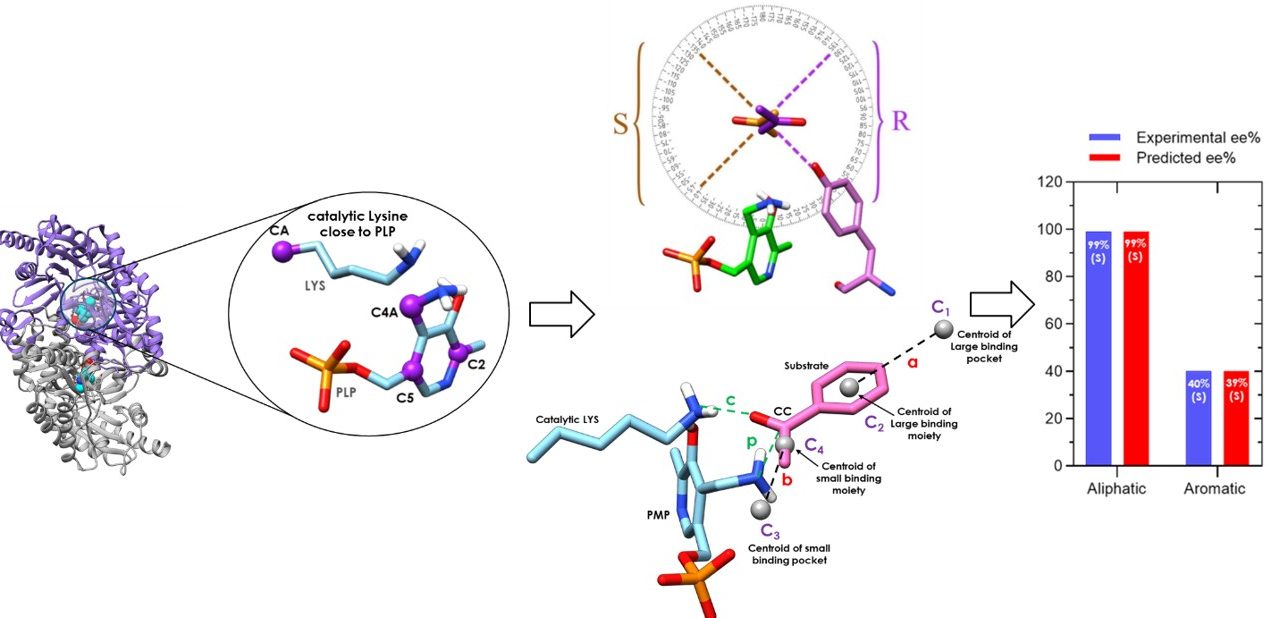
An artificial intelligence method to predict selectivity of transaminases and enantiomeric excess of transaminase-ketone reactions

The present invention describes identifying if a given Transaminase is (R)-Selective or (S)-Selective. Based on the binding of the substrate in the active site of a given transaminase, it is primarily based on torsion, the angle between specific atoms of the cofactor PLP and the catalytic Lysine, and the ten interactions of the substrate with...

June 26, 2020
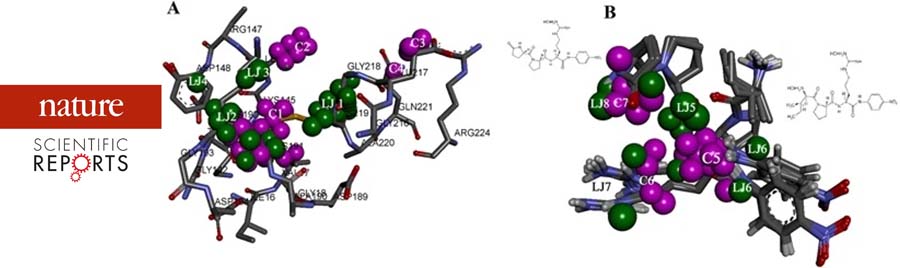
A Receptor Dependent-4D QSAR Approach to Predict the Activity of Mutated Enzymes

Screening and selection tools to obtain focused libraries play a key role in successfully engineering enzymes of desired qualities. The quality of screening depends on efficient assays; however, a focused library generated with a priori information plays a major role in effectively identifying the right enzyme. As a proof of concept, for the first time,...

June 24, 2020
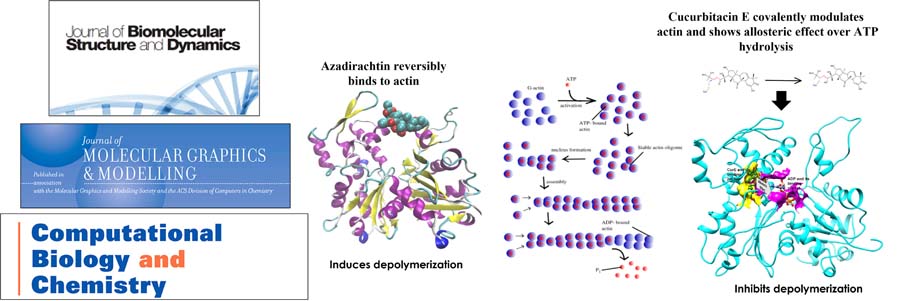
Mechanism of  Phytochemicals : Affects the Polymerization and Depolymerisation of Actins

Mechanical understanding of the correlation between actin assembly and ATP hydrolysis has been an object of intensive studies in biochemistry and structural biology. Azadirachtin(A) (AZA), a potential insecticide from neem, binds to actin and induces depolymerization in Drosophila. AZA binds to the pocket the same as that of Latrunculin A (LAT), but LAT inhibits actin...